Young Artists Talk Math
Drawing with Invisible Geometry
A Conversation with a Young Visual Artist
With Bella · September 2026
What type of visual art do you enjoy most, and how do you decide where to place things in your work?
I like sketching because it is simple and easy, and I can draw almost anything I want in a short amount of time. When I am deciding where to put things, I usually begin with basic shapes and add all the details afterward.
For the composition, I often imagine a flowing line that is easy for the viewer’s eyes to follow. This helps me make decisions about where to place and draw different objects.
Do you think about proportion or perspective while creating art?
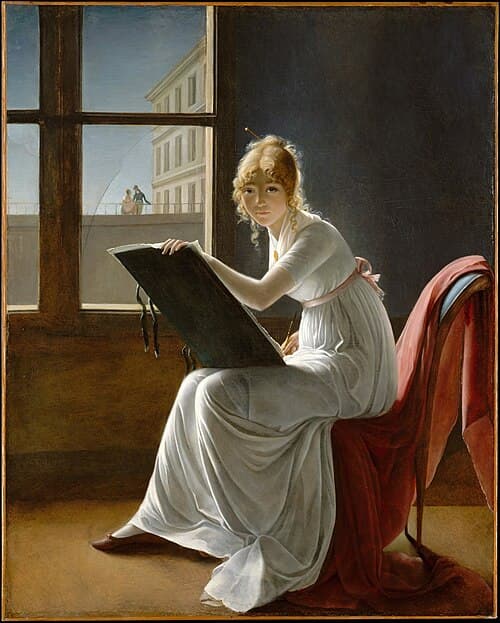
Yes, I think about proportion and perspective a lot. They are probably two of the most important things to consider when you want a piece to look cool and pleasing to the eye.
For example, when drawing a landscape, you need a foreground and a background to create depth. When designing characters, you also need perspective if you want them to look as though they are flying, looking downward, or moving through space.
Do you feel that you use math while drawing?
I usually do not consciously think about math when I draw because you do not really need to use arithmetic in the act of drawing. However, some mathematical concepts—especially geometry—overlap with the artistic process.
What might a math student find surprising about visual art?
A math student might be surprised that artists sometimes use ideas such as the Fibonacci spiral when thinking about composition. Famous artworks that are often discussed in connection with spiral or golden-ratio compositions include Hokusai’s The Great Wave off Kanagawa and Leonardo da Vinci’s Annunciation.
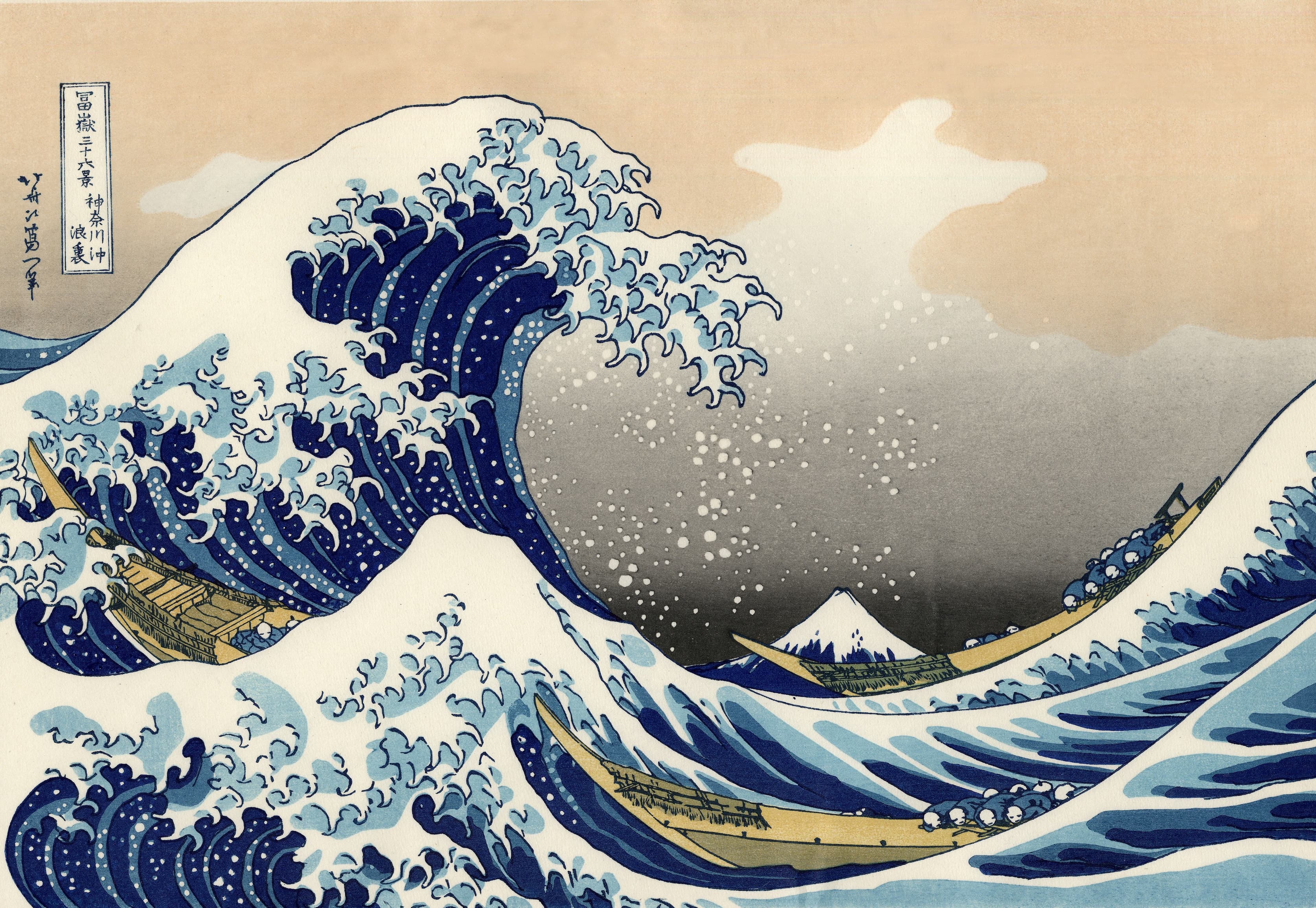
Even when artists are not calculating numbers, mathematical patterns can help create movement, balance, and a natural path for the viewer’s eyes to follow.