
10-Second Challenge
10-Second Challenge #1
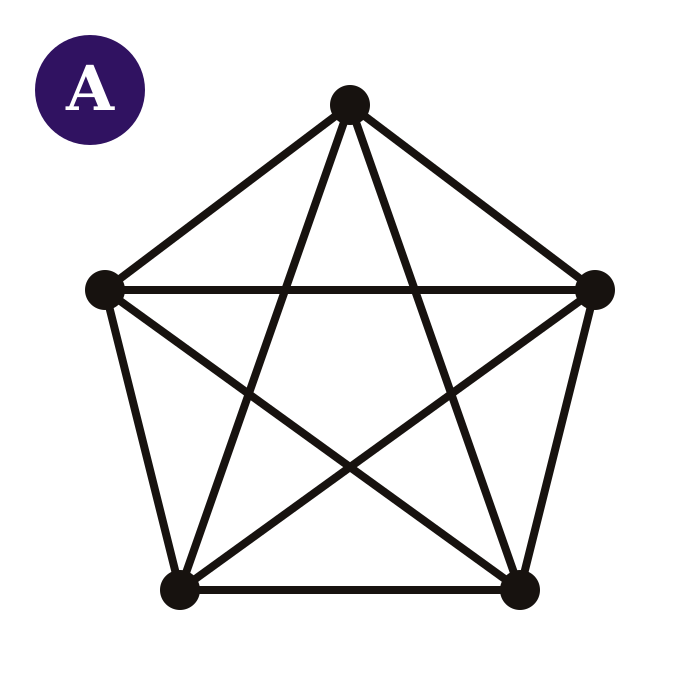
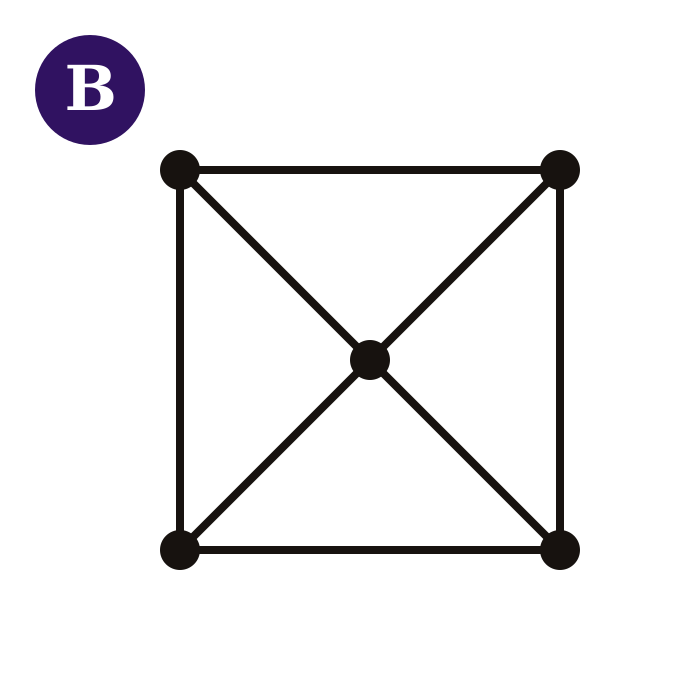
Which graph can you draw in one continuous stroke?
Can you draw each graph without lifting your pencil?
Rules
- Don't lift your pencil.
- Don't retrace any line.
Try both graphs before looking at the solution.
Show the solution
Graph A — Yes!
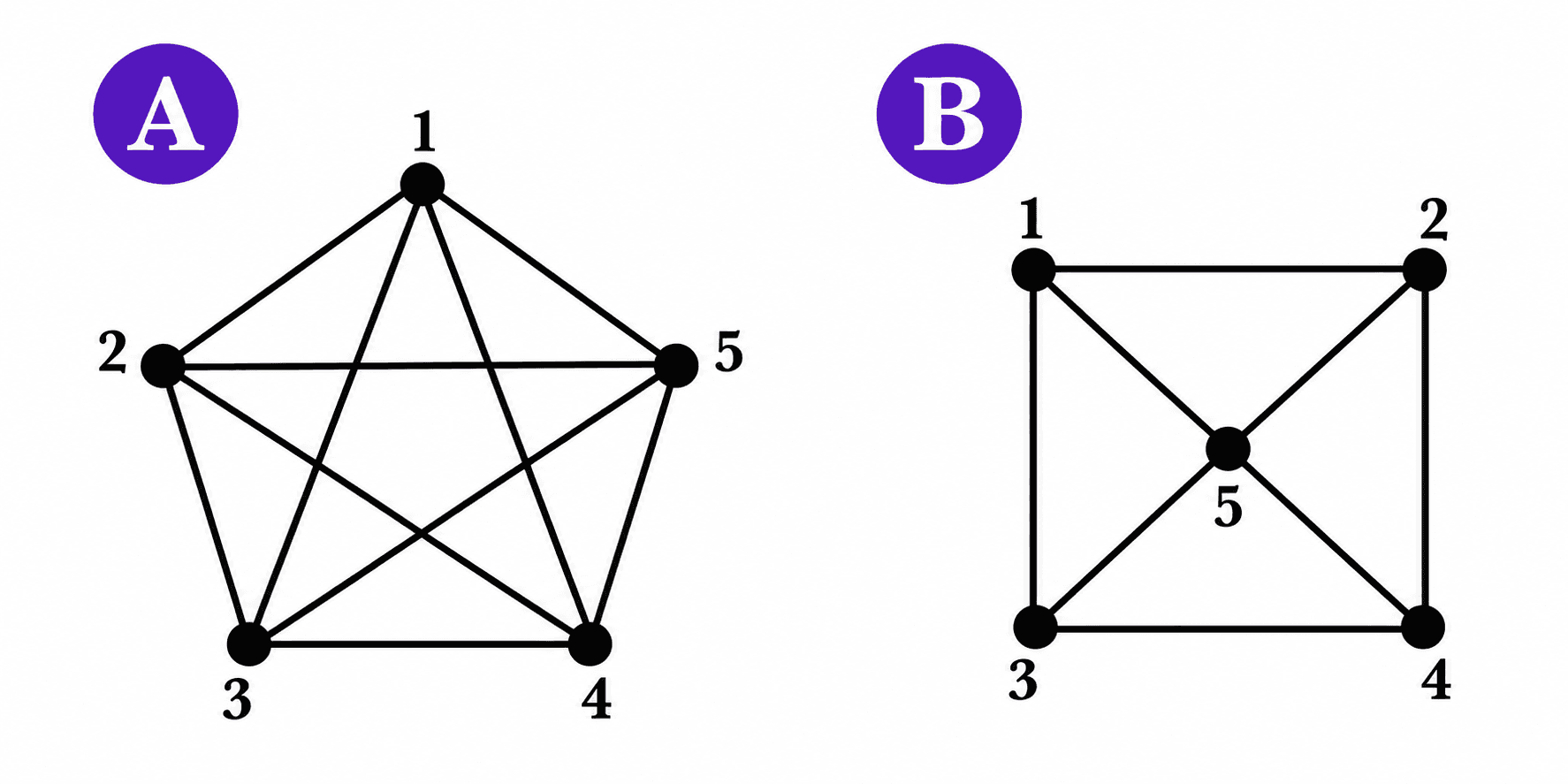
Graph A can be drawn in one continuous stroke without lifting your pencil or retracing any line.
One possible route is:
1 → 2 → 3 → 1 → 4 → 2 → 5 → 3 → 4 → 5 → 1
This route uses every edge exactly once and returns to the starting point.
Why does it work?
Count the number of edges connected to each vertex:
- Vertex 1: degree 4
- Vertex 2: degree 4
- Vertex 3: degree 4
- Vertex 4: degree 4
- Vertex 5: degree 4
Every vertex has an even degree.
That means Graph A has an Euler circuit: a route that uses every edge exactly once and ends where it started.
Graph B — No
Graph B cannot be drawn in one continuous stroke without retracing an edge.
Count the edges connected to each vertex:
- Vertex 1: degree 3
- Vertex 2: degree 3
- Vertex 3: degree 3
- Vertex 4: degree 3
- Vertex 5: degree 4
Vertices 1, 2, 3, and 4 all have odd degree.
A connected graph can be drawn in one continuous stroke only when it has:
- 0 odd-degree vertices — you can start and finish at the same vertex, or
- 2 odd-degree vertices — you start at one odd vertex and finish at the other.
Graph B has 4 odd-degree vertices, so it cannot be drawn in one continuous stroke.
The Math Behind the Challenge
This puzzle is an example of graph theory.
A graph is made of:
- vertices — the dots
- edges — the lines connecting them
The number of edges meeting at a vertex is called its degree.
This simple idea lets you determine whether a drawing can be completed in one stroke — without trying every possible route.